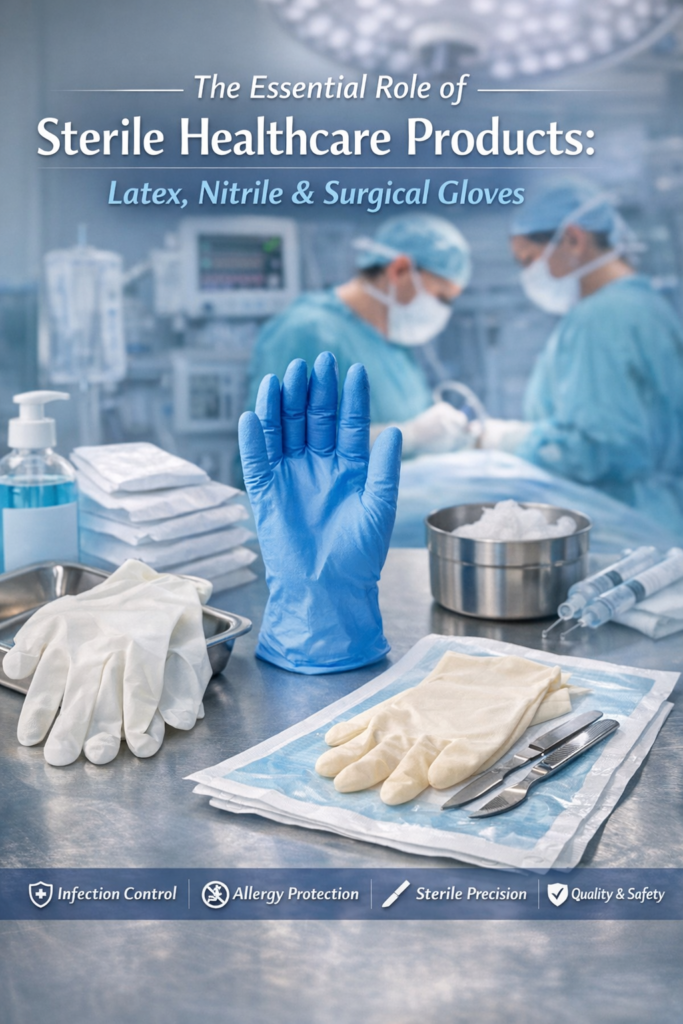
In modern healthcare environments, safety, precision, and infection control are non-negotiable. Among the most critical components supporting these priorities are Sterile Healthcare Products, particularly medical gloves. Latex, nitrile, and surgical gloves form the foundation of barrier protection across hospitals, clinics, laboratories, and specialized medical facilities worldwide.
This article explores the importance of sterile gloves, compares material options, and explains how choosing the right products enhances safety, compliance, and operational efficiency.
Understanding the Importance of Sterile Healthcare Products
Sterile Healthcare Products are designed to prevent contamination and reduce the risk of cross-infection between healthcare professionals and patients. Gloves, in particular, serve as a primary line of defense against bloodborne pathogens, bacteria, viruses, and hazardous substances.
In high-risk medical settings such as operating rooms, emergency departments, and intensive care units, sterile gloves are mandatory. Even in routine examinations, proper glove selection plays a vital role in infection prevention protocols.
Key functions of sterile gloves include:
- Preventing transmission of microorganisms
- Protecting patients during invasive procedures
- Shielding healthcare workers from exposure to bodily fluids
- Maintaining a sterile field during surgery
With global healthcare standards becoming increasingly stringent, the demand for high-quality Sterile Healthcare Products continues to grow.
Latex Gloves: Traditional Performance and Sensitivity
Latex gloves have long been a standard in medical practice due to their exceptional elasticity and tactile sensitivity. Manufactured from natural rubber, latex provides a snug fit that closely conforms to the hand, offering excellent dexterity and comfort during extended procedures.
Advantages of Latex Gloves
- Superior flexibility and comfort
- High tactile sensitivity
- Strong barrier protection against pathogens
- Reliable performance in surgical environments
Latex gloves are commonly used in surgical settings where precision is critical. Their natural elasticity reduces hand fatigue during long procedures, making them a preferred choice for many surgeons.
Considerations
Despite their benefits, latex gloves can cause allergic reactions in some individuals. Type I latex allergies have prompted healthcare facilities to diversify their glove inventory, often incorporating nitrile alternatives to accommodate sensitive staff and patients.
Nitrile Gloves: Advanced Protection and Versatility
Nitrile gloves are made from synthetic rubber and have gained widespread popularity due to their durability and hypoallergenic properties. As part of essential Sterile Healthcare Products, nitrile gloves offer strong resistance to chemicals, punctures, and tears.
Advantages of Nitrile Gloves
- Latex-free, reducing allergy risks
- High puncture resistance
- Excellent chemical resistance
- Strong barrier protection
- Comfortable fit with improved tactile sensitivity
Modern nitrile formulations have significantly improved flexibility, making them comparable to latex in terms of dexterity. In many healthcare facilities, nitrile gloves are now the primary choice for both examination and surgical applications.
Ideal Applications
- Emergency departments
- Laboratories
- Oncology units handling chemotherapy drugs
- Dental practices
- General patient examinations
Their versatility makes nitrile gloves a cornerstone of contemporary sterile healthcare solutions.
Surgical Gloves: Precision in Critical Procedures
Surgical gloves represent a specialized category within Sterile Healthcare Products. Unlike standard examination gloves, surgical gloves undergo rigorous sterilization processes and are individually packaged to ensure sterility.
Characteristics of Surgical Gloves
- Individually packed and sterilized
- Anatomically designed for enhanced comfort
- Textured surfaces for improved grip
- Thinner material for precision handling
- Strict quality testing standards
Surgical gloves are used in operating rooms and other sterile environments where invasive procedures occur. Their design supports precise movements, reducing the risk of errors during complex surgeries.
Both latex and nitrile materials are commonly used for surgical gloves, depending on facility requirements and allergy considerations.
Sterility Standards and Quality Assurance
Sterile Healthcare Products must comply with international regulatory standards to ensure safety and reliability. Gloves undergo multiple stages of quality testing, including:
- Water leak testing
- Tensile strength testing
- Puncture resistance evaluation
- Sterility validation
- Biocompatibility testing
Manufacturing facilities operate under controlled environments to prevent contamination during production. Advanced sterilization methods such as ethylene oxide (EtO) or gamma irradiation are used to achieve validated sterility assurance levels.
Adherence to international standards such as ISO certifications and regulatory compliance ensures consistent product performance.
The Role of Gloves in Infection Control
Healthcare-associated infections (HAIs) remain a significant global concern. Proper use of Sterile Healthcare Products, including gloves, is fundamental in reducing transmission rates.
Gloves serve as a barrier, but they are effective only when used correctly. Best practices include:
- Proper hand hygiene before and after glove use
- Changing gloves between patients
- Using sterile gloves for invasive procedures
- Disposing of gloves safely after use
In combination with gowns, masks, and other protective equipment, sterile gloves contribute to comprehensive infection control strategies.
Choosing the Right Material for Your Facility
Selecting between latex, nitrile, and surgical gloves requires careful evaluation of several factors:
1. Allergy Risk
Facilities with latex-sensitive staff or patients may prefer nitrile alternatives.
2. Procedure Type
Surgical procedures require sterile, anatomically shaped gloves, while routine examinations may use standard sterile or non-sterile options.
3. Chemical Exposure
Nitrile gloves provide superior resistance to chemicals and hazardous drugs.
4. Budget Considerations
Cost efficiency must be balanced with quality and compliance standards.
5. Comfort and Fit
Extended procedures require gloves that minimize fatigue and maintain dexterity.
A reliable supplier of Sterile Healthcare Products should offer comprehensive guidance to help healthcare providers make informed decisions.
Environmental and Sustainability Considerations
Sustainability has become an increasingly important factor in healthcare procurement. Manufacturers are adopting eco-conscious practices, including:
- Energy-efficient production processes
- Reduced packaging waste
- Improved biodegradability of materials
- Responsible sourcing of raw materials
While safety remains the priority, environmentally responsible manufacturing adds value to modern healthcare supply chains.
Why Partner with a Trusted Manufacturer?
The quality of Sterile Healthcare Products directly impacts patient safety and clinical outcomes. Working with an experienced manufacturer ensures:
- Consistent product quality
- Reliable supply chain management
- Compliance with international regulations
- Custom branding and packaging options
- Responsive customer support
Reliable suppliers invest in research and development to enhance glove performance, durability, and user comfort.
The Future of Sterile Healthcare Products
Technological innovation continues to drive advancements in glove manufacturing. Emerging trends include:
- Improved tactile sensitivity in synthetic materials
- Enhanced antimicrobial coatings
- Powder-free formulations
- Smart manufacturing automation
- Sustainable material development
As global healthcare systems evolve, the demand for high-performance Sterile Healthcare Products will continue to rise. Facilities require gloves that meet increasingly complex safety and operational standards.
Conclusion
Latex, nitrile, and surgical gloves remain essential components of modern medical practice. As core elements of Sterile Healthcare Products, they provide critical protection for healthcare professionals and patients alike.
Each material offers distinct advantages. Latex delivers unmatched elasticity and comfort. Nitrile provides durability and allergy-safe performance. Surgical gloves ensure sterility and precision during complex procedures.
Selecting the right glove solution requires careful consideration of clinical requirements, regulatory compliance, and safety standards. By partnering with a reputable manufacturer, healthcare facilities can maintain the highest levels of infection control while ensuring comfort and efficiency for medical staff.
Investing in high-quality Sterile Healthcare Products is not simply a procurement decision—it is a commitment to patient safety, professional integrity, and operational excellence.