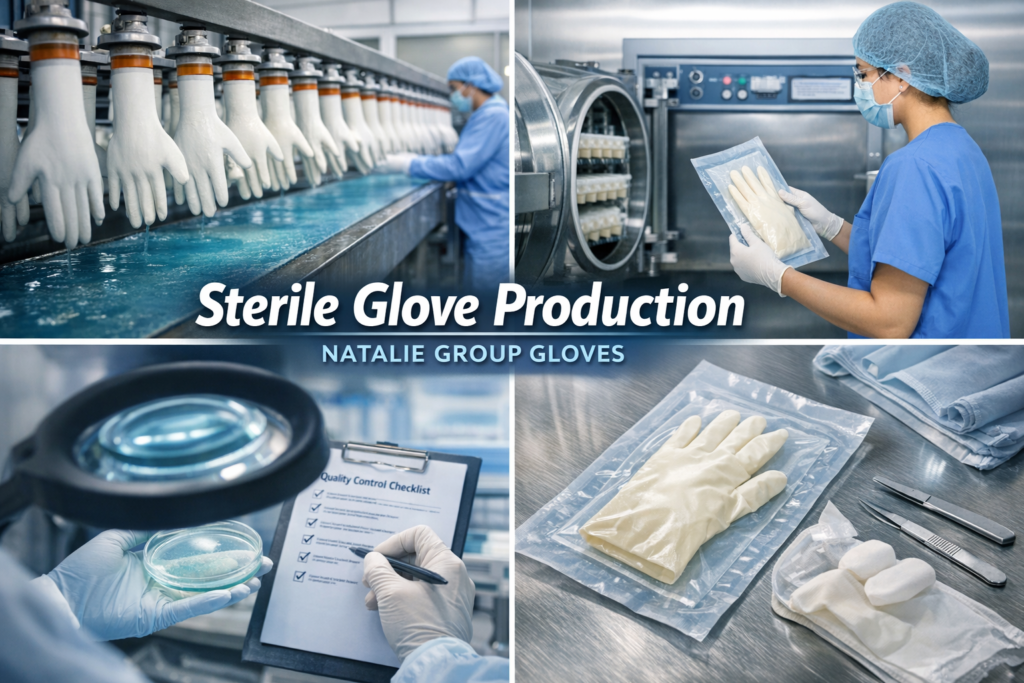
Sterile Glove Production: How NATALIE GROUP GLOVES Ensures Quality, Safety, and Compliance
In today’s healthcare and industrial environments, safety is non-negotiable. From operating rooms and emergency wards to pharmaceutical manufacturing and cleanroom laboratories, disposable sterile gloves play a critical role in infection control, contamination prevention, and worker protection. But not all sterile gloves are created equal. The real difference lies in one essential process: sterile glove production.
At NATALIE GROUP GLOVES, we specialize in sterile gloves designed to meet strict hygiene standards and high-performance demands. In this article, we’ll explain what sterile glove production involves, why it matters, and how NATALIE GROUP GLOVES delivers consistent safety, reliability, and quality from start to finish.
What Is Sterile Glove Production?
Sterile glove production refers to the full manufacturing process of gloves that are sterilized, sealed, and packaged to ensure they are free from viable microorganisms. Sterile gloves are commonly used in:
- Surgical procedures
- Clinical and hospital environments
- Dental clinics
- Pharmaceuticals and medical manufacturing
- Cleanroom laboratories
- Research facilities and biotech
Unlike regular examination gloves, sterile gloves must undergo additional controlled steps including cleanroom production, microbial testing, and sterilization protocols. This ensures every pair maintains sterility until it is opened and used.
Why Sterile Gloves Are Essential in Healthcare & Cleanrooms
Sterile gloves are critical because they reduce the risk of contamination and infection in high-risk settings. When healthcare professionals perform surgery, handle open wounds, or work with invasive devices, exposure to bacteria can cause serious complications.
Sterile glove production is directly linked to:
- Patient safety
- Reduced surgical site infections
- Improved staff hygiene
- Lower contamination risks
- Compliance with medical standards
That’s why hospitals, surgical teams, and cleanroom industries rely on suppliers with proven experience and quality assurance.
Key Steps in Sterile Glove Production
At NATALIE GROUP GLOVES, our sterile glove production process is structured to deliver safe and dependable sterile gloves with consistent quality.
1) Raw Material Selection & Quality Standards
Sterile glove production starts with carefully chosen raw materials. Common types include:
- Latex
- Nitrile
- Neoprene
- Vinyl (less common for sterile surgical use)
The quality of the raw material affects glove elasticity, tensile strength, chemical resistance, and comfort.
We prioritize materials that support:
- High tear resistance
- Consistent thickness
- Strong barrier protection
- Reduced risk of allergic reactions (where applicable)
2) Glove Forming and Shaping
After raw material preparation, gloves are shaped using glove formers (hand-shaped molds). This is where precision matters. A glove that is too thin may tear easily. Too thick may reduce sensitivity.
High-grade sterile glove production includes control of:
- Thickness consistency
- Grip texture
- Finger sensitivity
- Cuff strength and design
3) Washing, Leaching & Protein Reduction
During sterile glove production, gloves go through washing and leaching processes to remove impurities, residues, and proteins. This improves glove cleanliness and safety.
For latex gloves, this is especially important because:
- Proteins can cause skin irritation or allergic responses
- Residues can weaken glove integrity over time
4) Drying, Vulcanization & Quality Stabilization
Drying and curing (often called vulcanization) strengthens glove material and stabilizes elasticity. This is a key stage for ensuring durability and consistent glove performance.
5) Inspection & Performance Testing
No sterile glove production process is complete without strict inspection. Gloves are tested for:
- Pinholes and micro-tears
- Thickness consistency
- Tensile strength
- Stretchability
- Leakage resistance
This ensures the gloves offer reliable barrier performance and meet professional requirements.
6) Sterilization Process
Sterilization is what transforms gloves from “clean” to “sterile.” Sterile glove production typically uses one of these sterilization methods:
- Gamma irradiation
- Ethylene oxide (EO) sterilization
- Electron beam sterilization
Each method has advantages depending on glove type and packaging requirements.
At NATALIE GROUP GLOVES, sterile glove production follows approved sterilization practices to ensure sterility without compromising glove strength or material performance.
7) Sterile Packaging & Sealing
Sterile gloves must be sealed in packaging that maintains sterility during transport and storage. This often includes:
- Individual pair packaging
- Medical-grade sterile pouches
- Outer protective packaging for shipment
Packaging is vital to preserve sterility and protect gloves from moisture, dust, or environmental contamination.
Sterile Glove Production Quality Control: What Makes It Reliable?
If sterile glove production is not handled properly, even small defects can lead to serious consequences in surgical or pharmaceutical environments. That’s why quality control is one of the most important factors when choosing a sterile glove supplier.
Key aspects of trusted sterile glove production include:
- Cleanroom environment controls
- Batch-level microbial testing
- Regular equipment calibration
- Traceability and batch coding
- Compliance with medical manufacturing standards
At NATALIE GROUP GLOVES, our sterile glove production is designed to support consistency, safety, and trust across industries.
Choosing the Right Sterile Gloves for Your Industry
Different industries require different sterile glove specifications. When selecting gloves, consider:
✅ Medical & Surgical Use
- High sensitivity
- Strong tear resistance
- Sterile and individually packed
- Comfortable fit for long procedures
✅ Laboratory & Research Use
- Chemical resistance (often nitrile)
- Powder-free options
- Strong barrier protection
✅ Cleanroom & Pharmaceutical Use
- Low particulate shedding
- Sterility and contamination control
- High quality inspection and packaging
Why Businesses Choose NATALIE GROUP GLOVES
When safety matters, customers need more than a glove supplier — they need a partner they can trust. NATALIE GROUP GLOVES is committed to delivering sterile gloves that meet demanding professional environments.
What sets us apart:
- Strict sterile glove production controls
- Consistent product performance
- Focus on hygiene, packaging integrity, and compliance
- Gloves suitable for healthcare, cleanroom, and industrial use
- Reliable supply for bulk and long-term procurement
Whether you are managing hospital supplies, supporting surgical teams, or running a cleanroom production facility, NATALIE GROUP GLOVES delivers sterile glove solutions designed for safety-first industries.
Final Thoughts: Sterile Glove Production Is the Foundation of Safety
The glove you choose directly affects patient care, contamination risk, and workplace health. That’s why sterile glove production is more than manufacturing — it’s a safety system.
From materials selection and forming to sterilization, packaging, and inspection, every stage must be precise, tested, and compliant. At NATALIE GROUP GLOVES, we understand what’s at stake, and we’re dedicated to producing sterile gloves that professionals can depend on.
If you are looking for trusted sterile gloves backed by a strong sterile glove production process, NATALIE GROUP GLOVES is ready to support your needs.